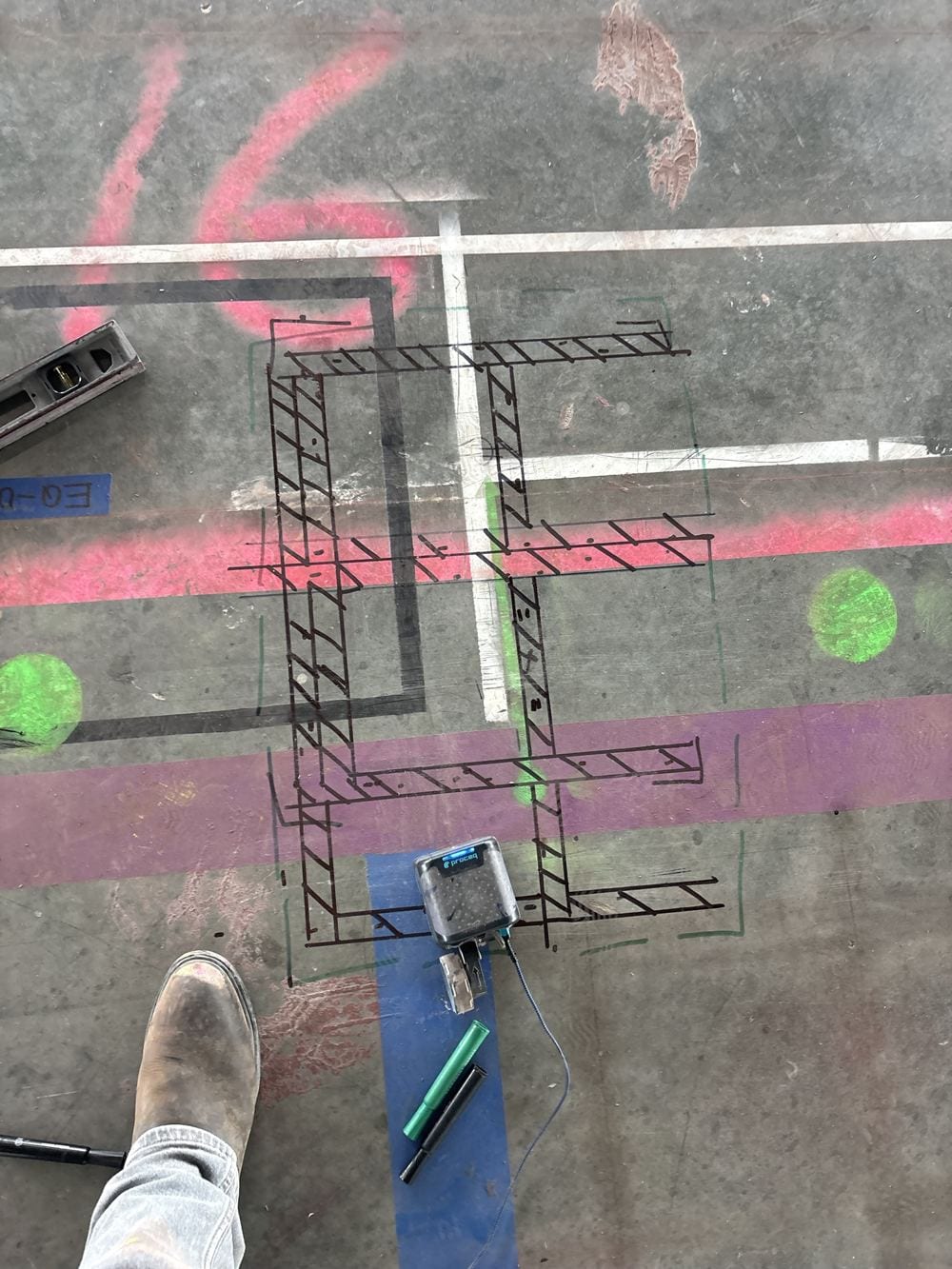
If you're a super, an electrical foreman or a coring sub on one of these jobs, this is how I look at that work as a GPR technician. I'll cover where the risk sits and what a good scan gives you before the first bit touches concrete.
Phoenix's data center build-out, from Ahwatukee to Avondale
You don't need to dig far into the news to see how big this has gotten. In Ahwatukee, Menlo Digital is building a campus of five two-story buildings, close to 1 million square feet in all. It's planned with its own electrical substation and more than 100 diesel generators. AZFamily reported that construction started in April 2026, and the project has drawn pushback from neighbors.
On the West Valley side, Prime Data Centers broke ground on the first three buildings of a five-building campus in Avondale. According to ConstructConnect, the campus sits on 66.5 acres. It's planned for 240MW of IT load across roughly 1.3 million square feet, with a planned investment of about $3 billion. The first phase of its substation is already commissioned.
Look at those numbers from a trade's point of view: substations, generator yards, huge electrical rooms and long runs of power and fiber between buildings. That's a lot of concrete, and a lot of it gets cut, cored or drilled after it's poured.
What's buried in a data center slab
GPR, or ground-penetrating radar, sends a radio signal into concrete or soil and reads what bounces back off buried objects. It shows me what's inside a slab without breaking it open. On a data center floor, there's usually a lot to find.
Most data center floors are slab-on-grade, meaning a slab poured right on the ground rather than spanning between beams. They're often packed with embedded conduit for power and grounding, plus heavy rebar to carry equipment loads. Elevated decks in office areas, parking structures or multi-story buildings may be post-tensioned. PT, or post-tension, concrete is reinforced with steel cables called tendons. They get stretched tight after the concrete cures and stay under huge tension for the life of the slab.
Each of those targets brings a different problem if you hit it:
- Energized conduit: a shock or arc-flash hazard for the operator, and possibly an outage on a system that's already live.
- PT tendons: a cut tendon can release violently and weakens the slab. The repair is slow and expensive.
- Rebar: usually the least dangerous hit, but cutting main bars in a heavily loaded area can mean an engineer's review and a delay.
- Grounding and bonding conductors: easy to miss on the drawings, and a pain to repair once they're cut.
When I scan, PT tendons get marked in red so nobody mistakes them for anything else. Conduit and rebar get their own marks, so the crew can see at a glance where it's safe to core.
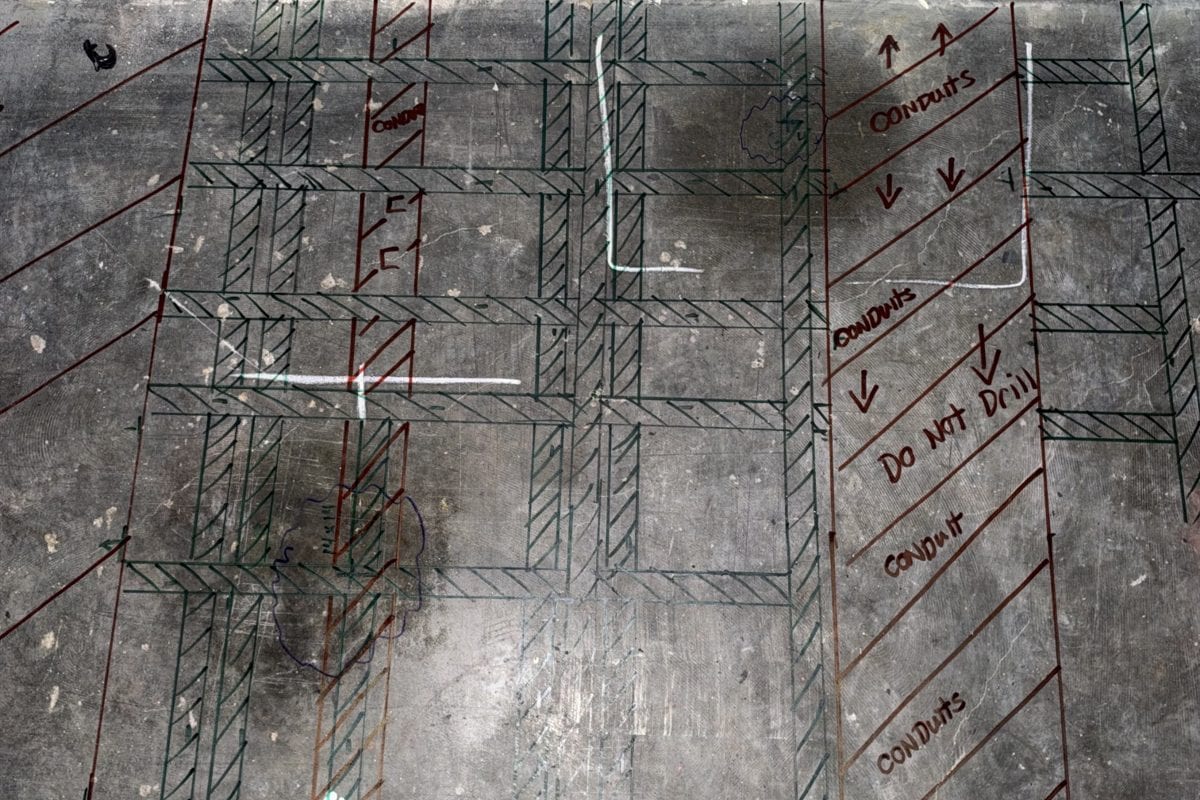
Coring and anchoring for power gear: where hits happen
Most strikes on a data center job don't happen during the big structural pours. They happen later, during fit-out. That's when electricians core through floors and walls for conduit risers, when crews drill anchors for switchgear, UPS units and rack rows, and when someone moves a penetration a few inches to clear a conflict that wasn't on the plan.
The drawings tell you where things were supposed to go. They don't always tell you where they ended up. Conduit drifts during a pour, tendon profiles curve, and a slab that's been through a couple of rounds of changes can look nothing like the as-builts. Before I scan a deck, I always assume the drawings are a starting point, not the final word.
That's why I scan the actual spot that's getting drilled, not a general area. Scanning right where each core is planned, and marking a clear zone around it, gives the coring crew room to work. If the spot isn't clear, we can shift it before anyone loses a bit or a day. If you want the basics on why this matters for any cut, I covered them in concrete scanning before core drilling or saw cutting.
Utility locating before you trench on a data center campus
The ground outside the building needs the same care as the slab inside. A campus with its own substation and a big generator yard has a lot of buried lines: medium-voltage feeders, duct banks, grounding grids, fuel lines, fiber between buildings, site lighting and irrigation.
Here's the part that catches people: Arizona 811 sends out the public utility owners to mark their own lines up to their service points. Anything on the owner's side of that point is private, and nobody from 811 is coming to mark it. On a campus that's still being built, a lot of what's in the ground is private and brand new, and it may not be on any map yet.
A private utility locate fills that gap. We combine GPR with electromagnetic locating, mark what we find in APWA colors (the standard color code: red for power, orange for communications, yellow for gas and so on), and can deliver a KML map. A KML file is a map file that opens in Google Earth, so you and your crews can pull it up later instead of relying on paint that's faded or been driven over.
How a GPR scan and layout work on a data center job
On a typical data center scope, the process is simple. You tell us where the cores, anchors or trenches are going, ideally with the planned locations marked on the slab or ground. We scan each location and a buffer around it, mark what we find right on the surface, and flag any spots that need to move.
For jobs that need a record, we can provide drill-guide reports. A drill-guide report documents what was found and where, so the engineer, the GC and the owner all have the same information. On a data center, where the owner and their engineers are usually watching every penetration closely, that paperwork can save you a lot of back-and-forth. We can also help coordinate core drilling crews, so scanning and coring happen in the right order without long gaps between them.
Phoenix brings its own conditions to this work, too. Heat affects how long crews can stay on a slab and when concrete gets cut, so lining up scanning ahead of coring keeps the schedule moving. Whether your job is in Phoenix, Avondale, Chandler, Mesa or Tempe, our Arizona concrete scanning and utility locating page has more about what we do in the Valley.
Common questions
Can GPR tell conduit from rebar in a data center slab?
Usually, yes. Rebar shows up in a regular grid while conduit tends to run alone or in bundles along its own path. A technician reads that pattern and marks each target so the coring crew knows what to avoid.
Do I need a scan for every core on an elevated deck?
On a post-tensioned or heavily loaded deck, every penetration should be scanned. Tendons, conduit and rebar can sit inches from a spot that looked clear on the drawings, and one hit can be costly or dangerous.
Will 811 mark the private lines on a data center site?
No. Arizona 811 sends out the public utility owners to mark their own lines. Private lines on the owner's side, like feeders to generator yards, site lighting or fiber between buildings, need a private locate.