If you run work in Nashville, that means years of digging, trenching, coring and saw cutting on one stretch of riverfront. I'm a GPR technician, and this post covers what I'd want a superintendent to think about before the first bucket goes in or the first core bit touches concrete over there.
What's Getting Built on the East Bank
The Oracle plan calls for 23 buildings, an amphitheater, a hotel, a central lake and green space. WSMV reports it's planned for completion by the end of 2031 (WSMV). Oracle says the first buildings should open in 2030. The company is also putting $175 million into public infrastructure: a pedestrian bridge over the Cumberland, a public park, greenway connections and street improvements (Oracle). NewsChannel 5 notes the work will be phased over several years, next to the new Nissan Stadium and the River North Greenway (NewsChannel 5).
The road work runs alongside it. TDOT and Metro plan to lower the viaduct leading to the Victory Memorial Bridge and rebuild James Robertson Parkway between Interstate Drive and South First Street. That includes new signals and utility upgrades. Construction is set to start in spring 2027, with the bridge closed from summer 2027 to summer 2029 (TDOT).
Big projects like these pull in everyone else: electricians, plumbers, MEP subs, site contractors, coring crews and the folks who'll be doing tenant fit-outs for years after. Every one of those trades either digs into the ground or drills into concrete at some point.
Why an Old Industrial Riverfront Is Tough Ground
Oracle describes the campus as turning a former industrial site into a greener riverfront (Oracle). That's great for the city. For anyone digging, it means caution.
Industrial land changes hands and gets rebuilt many times. Lines get abandoned in place instead of pulled. Old foundations and slabs get buried rather than hauled off. Drawings from decades ago, if they exist at all, rarely match what's in the ground. When I walk onto a site with that kind of history, I assume there's more down there than the plans show until the scan tells me otherwise.
GPR (ground-penetrating radar) helps with that. It sends radio waves into the ground or into concrete and reads the signals that bounce back off buried objects. Metal pipes, plastic lines, conduit, voids and old concrete all show up differently. It doesn't replace good records or an 811 ticket, but it does give you a picture of what's actually there before you commit equipment to it.
What 811 Marks and What It Leaves to You
Calling 811 before you dig is the law, and it's the first step on every job. It also matters more than people think. The Common Ground Alliance's 2025 DIRT summary counted 221,717 damage reports, and not notifying 811 before digging was still the single biggest root cause. Telecom and cable lines made up 51% of the facilities hit, and natural gas made up 36% (Trenchless Technology).
The catch is that an 811 ticket brings out the utility owners to mark their lines. On a big private site, a lot of what's buried belongs to the property instead: lighting circuits, private water and storm lines, feeds between buildings, irrigation, and whatever's left from earlier owners. Those lines are on you to find. I went into this in more detail in what 811 won't mark before you dig in Nashville.
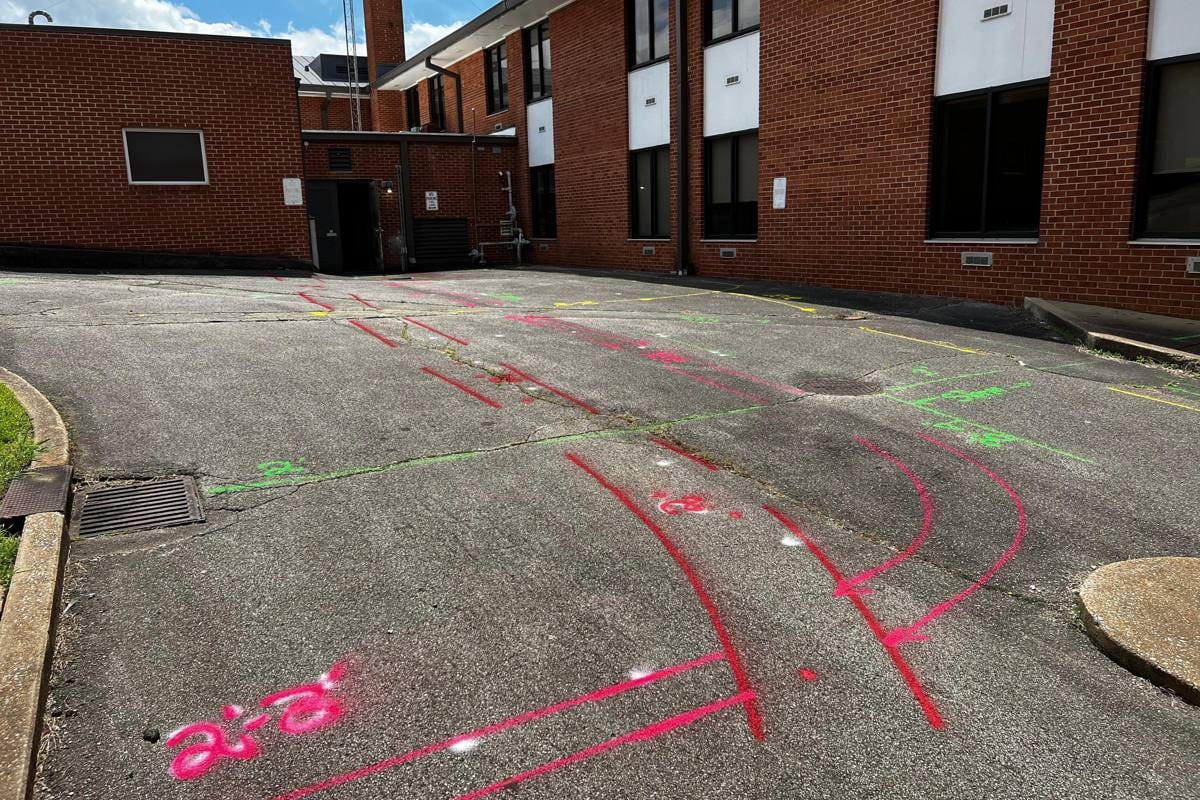
A private utility locate fills that gap. Using GPR, we mark what we find on the surface in APWA colors, the standard color code the whole industry uses (red for power, yellow for gas, orange for communications, and so on). On a campus-sized job that changes week to week, that paint doesn't last long, so we also provide a KML map. That's a file you can open in Google Earth or on a phone, so the next crew sees the same lines even after the paint is gone.
Coring and Cutting Existing Concrete
Digging is only half of it. Once structures go up, and in every existing building nearby that gets renovated, the work moves into the concrete. Electricians need floor penetrations. Plumbers core for drains and risers. MEP subs cut trenches in slab-on-grade (a concrete slab poured directly on the ground) for new runs. Every one of those holes has something it shouldn't hit.
Here's what I'm looking for when I scan a slab or deck before coring:
- Rebar, the steel reinforcing bars that give concrete its strength. Cutting a few isn't always a disaster, but the engineer should be the one to decide that.
- Conduit, which can carry live power through the slab.
- Post-tension cables, or PT cables. These are steel tendons (high-strength cables) pulled extremely tight and locked off at the slab edges to hold an elevated deck together. Cutting one is dangerous and expensive.
- Voids, empty pockets that can weaken the slab around the hole.
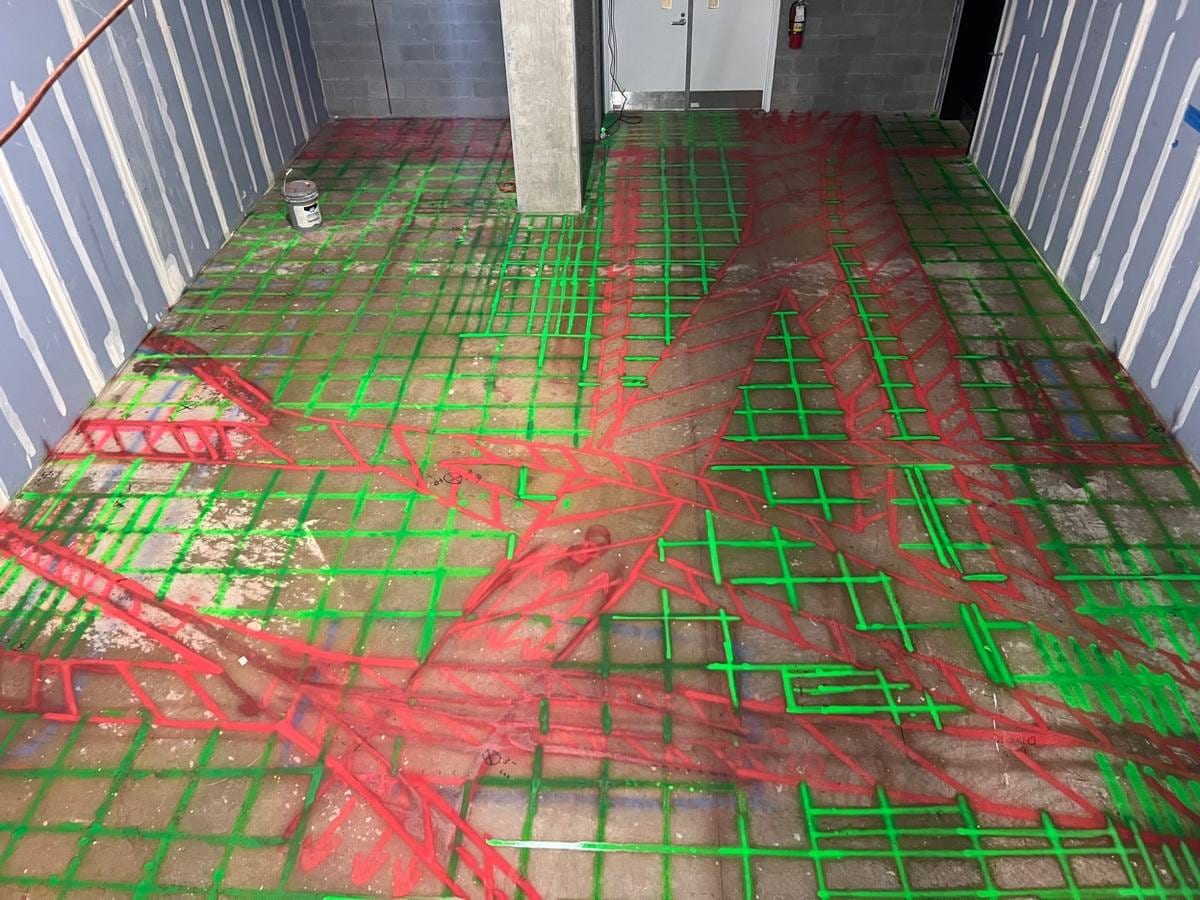
PT is the one that gets the most attention, and it should. Elevated decks in parking garages and commercial buildings often use it. Before I scan a PT deck, I want to know where the anchors are along the edges and roughly which direction the cables run, because that tells me where to expect them. Then I mark them right on the surface. We mark PT cables in red so nobody confuses them with rebar or conduit lines. If you want more background, our post on concrete scanning before core drilling or saw cutting walks through the basics.
Putting Scan Results to Work in the Field
A scan only helps if the crew can use it. On a busy site, that means marks that make sense to someone who wasn't there when they went down. I lay out the area I scanned, mark what I found, and circle the spots that are clear to drill when that's what the job needs.
For coring jobs, a drill-guide report puts that on paper: the scan area, what was found, and the clear locations, so the coring crew and the engineer are looking at the same thing. For site work, the KML map does the same job for buried utilities. Both give you something to hand the next sub instead of trying to explain it over the phone.
Scheduling matters too. With several large projects running at once on the East Bank and the bridge closure coming in 2027, the calendar will get crowded. Booking scanning and locating early, before the coring crew or excavator shows up, keeps a job from stalling while everyone waits to find out what's underneath. Ground Radar Techs covers Nashville and the surrounding area, including Brentwood, Franklin and Murfreesboro, from our Nashville page.
The East Bank is going to be one of the busiest pieces of ground in Tennessee for the rest of this decade. Plenty of what's under it was put there long before anyone drew up a campus plan, and every core and every trench is a chance to find it the hard way or the easy way.
Common questions
Does 811 mark private utilities on a commercial site in Nashville?
No. Tennessee 811 sends out the utility companies to mark the lines they own. Lines past the meter or owned by the property, like site lighting, private water and storm lines, and feeds between buildings, usually need a private utility locate.
Can GPR find post-tension cables before I core a deck?
Yes. GPR can pick up post-tension cables, rebar and conduit in most slabs and decks so they can be marked on the surface before anyone drills. We mark PT cables in red so they stand out from everything else.
What do I get after a utility locate?
Paint and flags on the ground in APWA colors, plus a KML map you can open on a phone or computer and share with your crews. For concrete work, we can provide a drill-guide report showing where it's clear to core.